What Weight Kettlebell Should I Buy?
You’ve found the kettlebell and you know you want one. Then you see the weight options, and the doubt creeps in. What if you go too light and outgrow it in a month? What if you go too heavy and it sits in the corner gathering dust? What do people who actually train with kettlebells start with?
Getting the weight wrong is one of the most common and avoidable mistakes in kettlebell training. This guide removes the guesswork, so you can buy with confidence and get to work.
Kettlebell weights that most people start with
Wolverson Fitness has been designing and supplying kettlebells since 2008, when founder Jason McCarthy saw that the UK market lacked truly quality options. After more than 17 years and thousands of customers, these are the starting weights we consistently recommend:
|
Experience Level |
Women |
Men |
|
Beginner |
8kg | 12kg |
|
Consistent amateur training |
12kg | 20kg |
|
Advanced athlete |
20kg | 32kg |
These numbers are based on the most common movements people start with: the swing, the goblet squat and the clean. Go too light and you won’t generate the hip drive needed to make those movements effective. Go too heavy and technique breaks down before the muscles have learned the pattern.
If you’re unsure, go one step lower than you think you need. You can always add weight; you can’t undo a strained back.
Read why some Wolverson customers wish they bought them earlier.
Why is buying kettlebells so difficult?
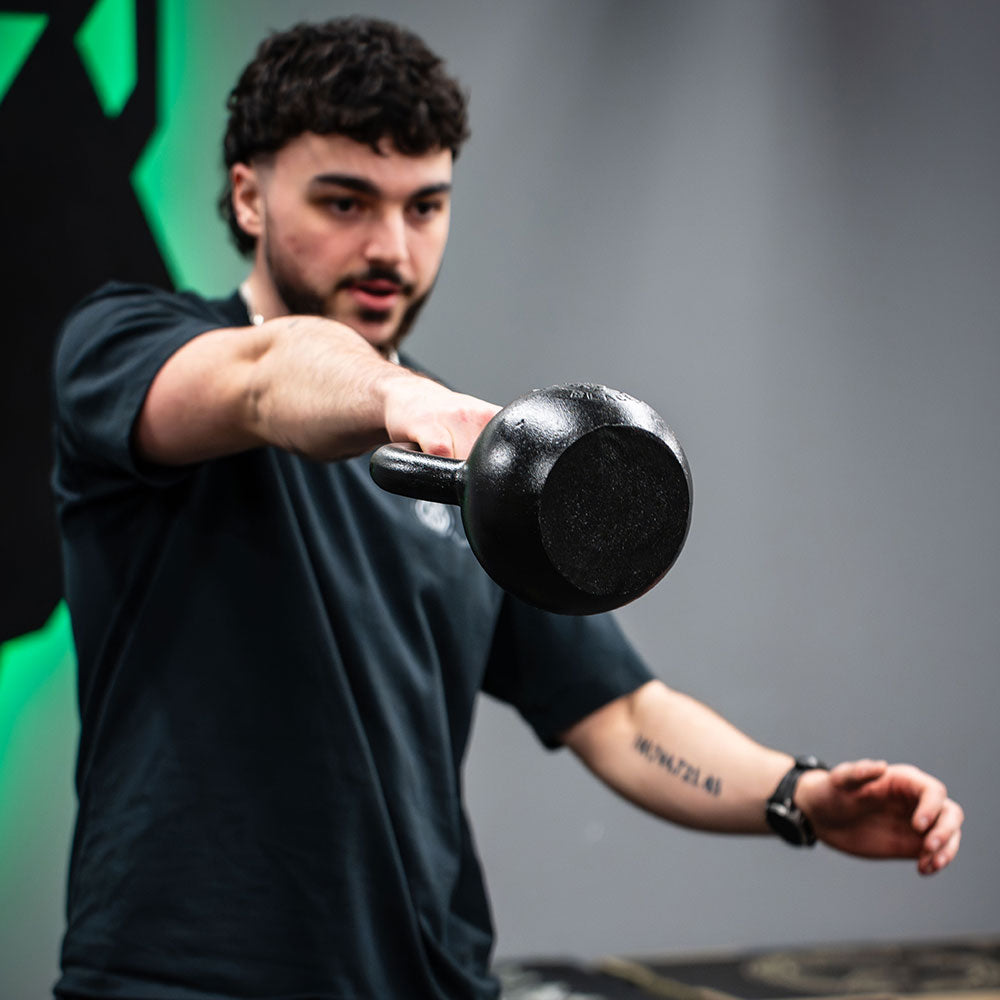
Buying a kettlebell feels hard because the advice online is contradictory, the weight increments feel larger than expected, and you’re making a physical and financial decision at the same time. This combination creates real uncertainty, particularly for first-time buyers.
There’s also no universal starting point. The right weight depends on what you’re training for, the movements you plan to use, your current strength and whether you’re training alone or with a coach. A 16kg kettlebell that’s perfect for swings might be too heavy for Turkish get-ups and too light for loaded carries. Context matters.
What doesn’t help is the amount of generic advice that ignores the difference between kettlebell styles entirely, which brings us to the question most guides skip over.
Why the design matters as much as the number
Choosing the right weight is only half the decision, as the type of kettlebell you buy shapes how that weight feels in your hand, which directly affects whether you use it consistently. If it’s uncomfortable, you’re unlikely to keep training with it.
Wolverson makes three main types, each with meaningful differences:
Foundation kettlebell
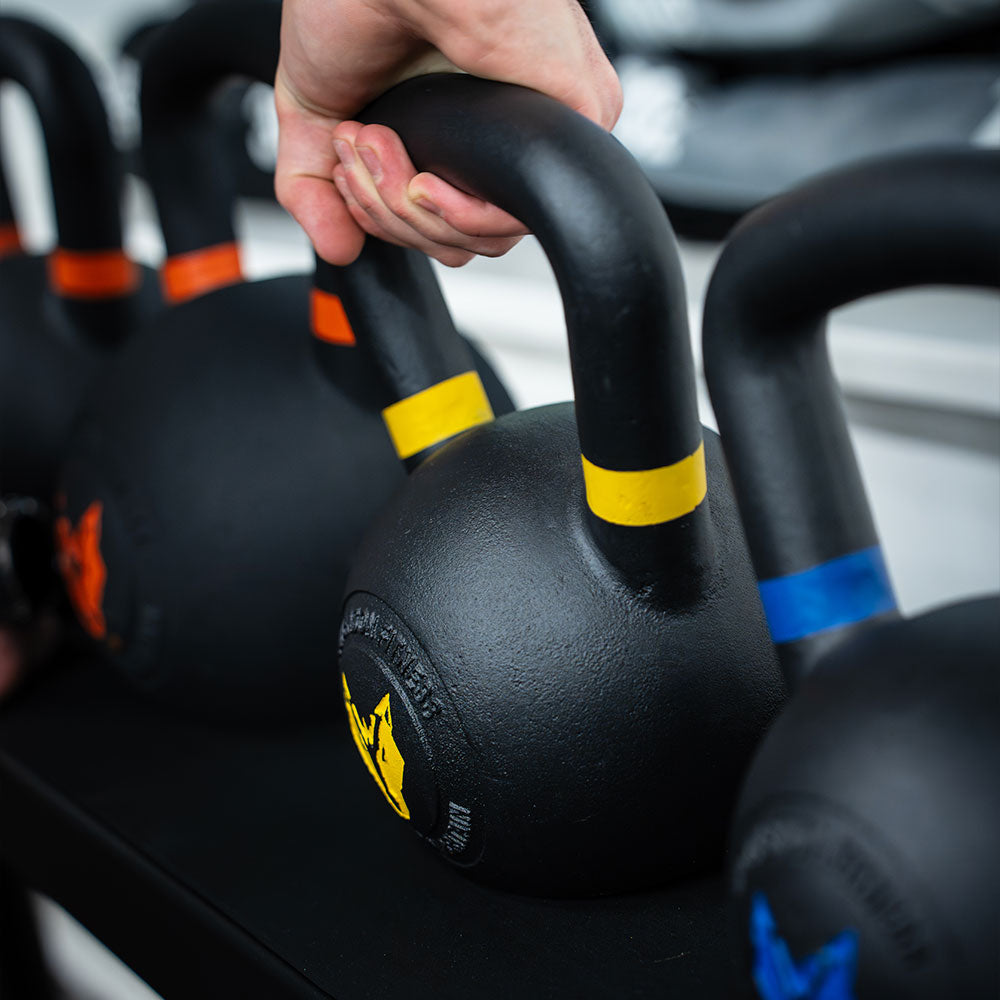
The most accessible starting point. Colour-coded by weight, with a uniform handle size and a no-ridge guarantee on every cast, Foundation kettlebells are built for comfortable, repeated use from day one. If you’re new to kettlebells and want a reliable first bell at a sensible price, this is where to start.
"The cost seems high at first glance, but once you get your hands on them the quality is obvious", says customer Mick K on Trustpilot. Mick came to Wolverson through a recommendation from a friend in kettlebell sport and hasn't looked back.
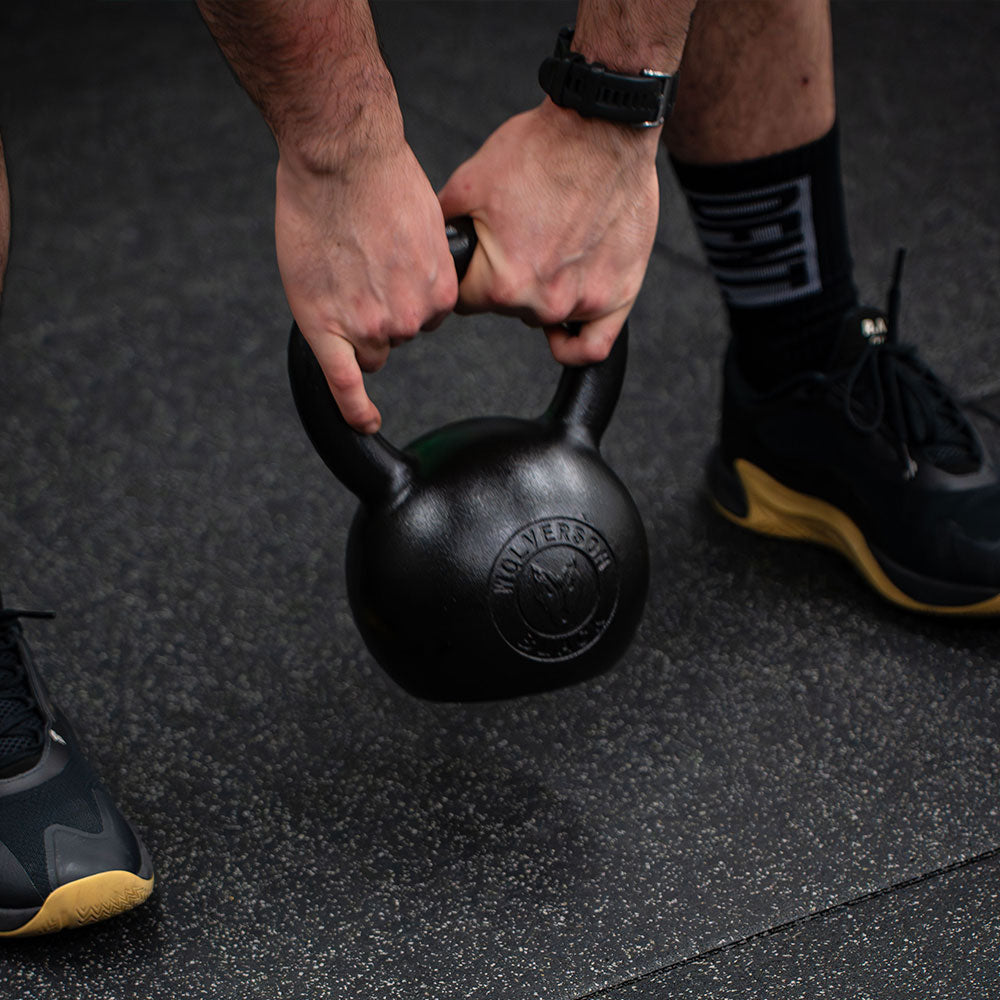
Black Series Kettlebell
A wider, flared handle designed specifically for hardstyle training: two-handed swings, explosive power work and grip-intensive movements. It’s the recommended bell for StrongFirst Great Britain. If you’re drawn to that style of training or building a home gym around compound strength work, the Black Series is a better fit.
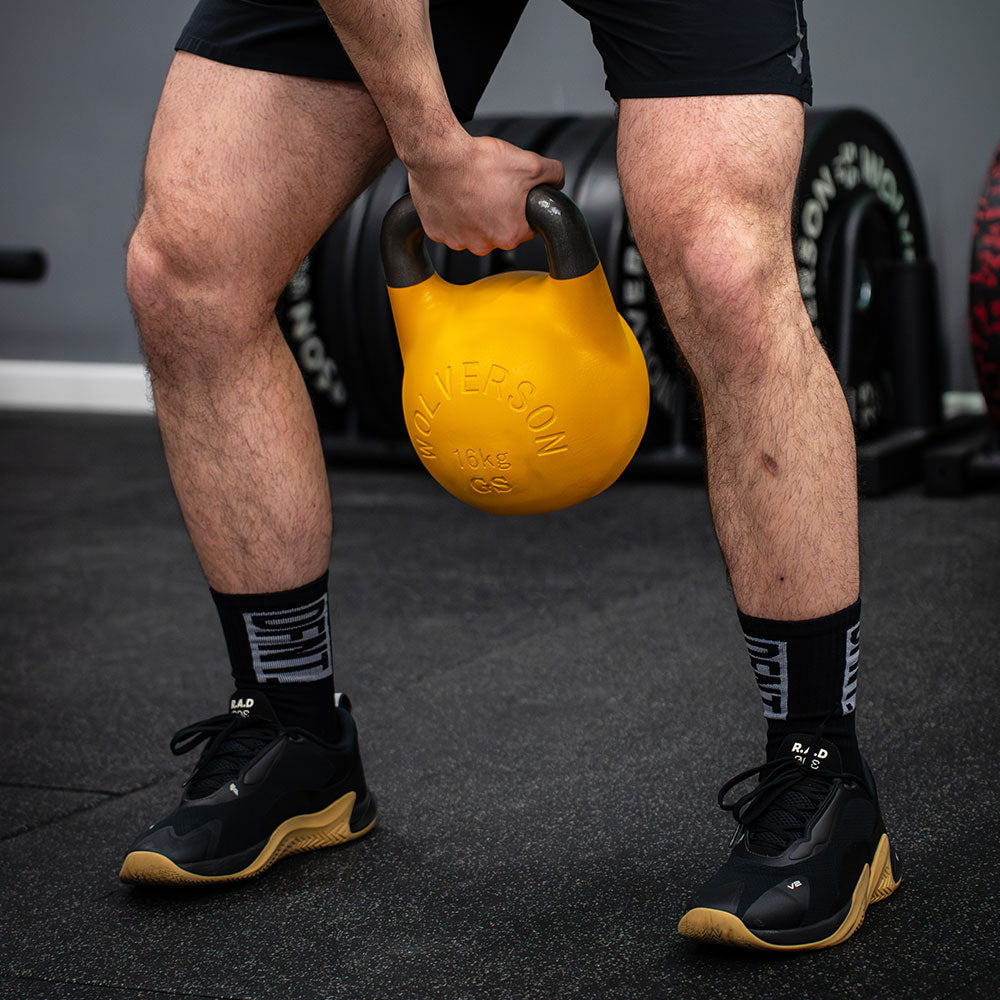
Competition and GS Kettlebells
Both keep consistent handle and bell sizes across the full weight range, so your technique stays the same whether you’re lifting 12kg or 32kg. That consistency is especially valuable if you’re progressing through weights or training for HYROX. The GS Competition kettlebells were designed with feedback from the GS community and recommended by Sergey Rudnev, Mike Mahler and Steven Cotter.
One customer has ordered 11 kettlebells across three months. Another is on his third purchase. The quality is the constant reason people return, just read what others have to say.
The build quality of your first kettlebell affects your training habits more than most people expect. Rough seams mid-session don’t just hurt, they can break your focus and make you less likely to come back.
How to choose a kettlebell weight you won’t regret
We recommend asking yourself three questions before you buy.
1. What movements will I actually do?
Swings and deadlifts allow for heavier weights because they’re hip-driven and involve the whole body. Presses and Turkish get-ups require more control and typically call for lighter starting weights. If you plan to do both, lean towards the lower end of your range for your first bell.
2. What’s my current training background?
Someone who trains regularly at the gym will likely start closer to the top of the recommended range. Someone returning from a break, or starting from scratch, should start lower. Kettlebell movements are technical, so strength alone doesn’t prepare you for the coordination they require.
3. Do I want one bell or a set?
Most people start with one, and that’s perfectly sensible. But many find themselves wanting a second within a few months, either because they’ve progressed or because different movements need different weights. If you’d rather not buy twice, the Wolverson Adjustable Kettlebell adjusts from 12kg to 32kg across 20 different weight combinations. It’s a higher upfront investment, but it covers a long stretch of training without needing anything else.
The buying mistakes that lead to regret
Buying too heavy because it feels like better value. It isn’t if you can’t train safely with it. A 24kg kettlebell that sits unused costs more than a 16kg one you use three times a week.
Buying too light because it feels safer. Under-loading is also a problem if the weight doesn’t challenge you, because the movement patterns that make kettlebell training effective never fully develop.
Ignoring the handle. A handle that’s too thick for your hand or rough enough to tear your palm will cut sessions short and put you off training. Every Wolverson kettlebell comes with a no-ridge handle guarantee for purposeful training.
Ready to add to your kettlebell collection?
Browse the full range below or read our complete Kettlebell Guide for a deeper look at the benefits of kettlebell training and product comparison.
Stan Georgiiev is on his third purchase: "The main reason I keep buying from them is their focus on customers. The team is super professional and really takes care of you."